
Have you ever stood somewhere and wondered, “Wait… how long is 100 feet anyway?” It’s one of those distances that sounds simple until someone asks you to picture it.
Then your brain kinda does that funny thing where it flips between football fields, cars, and random buildings before quietly giving up. Happens more often than you’d think.
The truth is, 100 feet isn’t a distance most of us naturally visualize. We know what a few feet looks like because we live with it every day. But once numbers start climbing, our sense of scale gets surprisingly fuzzy.
That’s exactly why comparing measurements to familiar objects works so well. Suddenly, a number becomes something you can actually imagine standing beside.
To put it into perspective, 100 feet in length equals 30.48 meters, 33.33 yards, 1,200 inches, or roughly 0.019 miles. At an average walking pace, it takes around 33–40 seconds walking to cover the distance casually. It’s also close to the height of many 10-story height buildings, depending on floor design.
Whether you’re involved in construction, planning a property, buying measuring tools, or you’re simply curious about what does 100 feet look like, these real-world comparisons make everything much easier to understand.
Let’s explore fifteen surprisingly familiar things that measure 100 feet.
| # | Thing | Approximate Length/Height | Why It’s a Good 100-Foot Reference |
|---|---|---|---|
| 1 | Seven compact cars | ~98–105 ft | Seven cars lined up equal about 100 feet. |
| 2 | Two school buses | ~90–100 ft | Two standard buses end-to-end are close to 100 ft. |
| 3 | Football field (goal line to 33-yard line) | 100 ft | One-third of a 300-foot football field. |
| 4 | Basketball court + 6 ft | ~100 ft | A 94-foot court plus 6 feet. |
| 5 | Tennis court + 22 ft | ~100 ft | A 78-foot court with extra distance. |
| 6 | 1⅔ bowling lanes | ~100 ft | A 60-foot lane plus two-thirds of another. |
| 7 | 61% of an Olympic pool | ~100 ft | An Olympic pool is 164 feet long. |
| 8 | 10-story building | ~100 ft tall | Many buildings average about 10 feet per story. |
| 9 | Mature oak tree | ~80–100 ft tall | Large oak trees can reach 100 feet. |
| 10 | Mature pine tree | ~100 ft tall | Some pine species grow to around 100 feet. |
| 11 | Semi-truck with trailer | ~100 ft (with clearance) | Truck and safety space total about 100 ft. |
| 12 | Fire truck aerial ladder | ~100 ft | Extended ladders often reach this length. |
| 13 | Luxury yacht | ~100 ft long | Many luxury yachts are around 100 feet. |
| 14 | 18 adults lying head-to-toe | ~100 ft | Eighteen average adults equal about 100 feet. |
| 15 | 100-foot tape measure | Exactly 100 ft | A standard tool for measuring 100 feet in length. |
Understanding 100 Feet Before Looking at Examples

Before jumping into real-world objects, it’s helpful to understand what this measurement actually means.
Here’s a quick conversion guide:
- 100 feet = 30.48 meters
- 100 feet = 33.33 yards
- 100 feet = 1,200 inches
- 100 feet = approximately 0.019 miles
Those numbers are useful, sure, but they still don’t create a picture in your mind. That’s where comparison comes in. Our brains remember shapes and familiar objects much better than raw measurements. Funny little trick of human psychology, isn’t it?
Another simple way to estimate the distance is by walking. Most adults cover about 2.5 to 3 feet per step, meaning you’ll take roughly 35 to 40 steps to reach 100 ft. It’s not exact, but it’s close enough for everyday estimating.
1. About Seven Compact Cars Parked End-to-End
One of the easiest 100 feet examples involves everyday vehicles.
An average Compact car or Sedan measures between 14 and 15 feet long. Park seven of them bumper-to-bumper, and you’ll have something remarkably close to 100 feet.
Most parking lots accidentally create this comparison every single day, yet hardly anyone notices. It’s kinda funny once you start looking for it.
If someone asks what is 100 feet, imagine seven family cars lined up in your neighborhood.
2. Two Standard School Buses
A Standard school bus generally measures around 45 to 50 feet.
Place two School buses nose-to-tail, and you’ve almost perfectly recreated 100 feet in length.
It’s one of the most practical objects that are 100 feet long because nearly everyone has seen school buses throughout their life.
Suddenly, that mysterious measurement feels much less mysterious.
3. The Distance From One Goal Line to the 33-Yard Line
Sports fields offer fantastic distance visualization.
A full Football field stretches 300 feet from goal line to goal line. That means 100 feet represents exactly one-third of that playing surface.
Stand on the goal line and walk to roughly the 33-yard line, and you’ve traveled about 100 feet compared to a football field.
It’s an easy mental shortcut that sports fans instantly recognize.
4. Slightly Longer Than a Basketball Court
A regulation 94-foot basketball court is almost the same length.
Add about six extra feet beyond the baseline, and you’ve reached 100 ft measurement.
That’s why many coaches and facility managers use basketball courts as quick references when discussing spacing or layouts.
It isn’t exactly 100 feet but it’s pretty darn close.
5. Longer Than a Tennis Court

A standard 78-foot tennis court is shorter than 100 feet.
Add approximately 22 more feet beyond one baseline, and you’ve reached the full measurement.
This comparison helps anyone familiar with tennis court measurements picture the extra distance surprisingly well.
It sorta stretches farther than your first guess.
6. Nearly Two Bowling Lanes
A regulation 60-foot bowling lane extends from the foul line to the headpin.
If you imagine one full lane plus about two-thirds of another, you’re looking at approximately 100 feet.
Bowling alleys are larger than many people realize, and this comparison often surprises folks.
Guess our brains shrink bowling lanes for some odd reason.
7. Twice the Length of an Olympic Swimming Pool
A 50-meter Olympic pool measures around 164 feet.
That means 100 feet equals roughly 61% of the pool’s length.
If you’ve ever watched competitive swimming, you can probably picture stopping just past the halfway point.
It’s one of the better real-world measurement references for athletes.
8. Around the Height of a Ten-Story Building
Many commercial buildings average about 10 feet per floor.
Multiply that across ten floors, and you arrive near the 10-story height mark.
Of course, office towers sometimes use taller ceilings, while residential apartments may differ a little, but the estimate works remarkably well.
Whether it’s an Office building, Apartment building, or Low-rise apartment building, many fall close to this vertical measurement.
It’s one of the easiest ways to understand building height without needing blueprints.
9. A Mature Oak Tree
Nature gives us excellent measuring sticks too.
A healthy Mature oak tree often reaches around 80 to 100 feet tall.
Standing beneath one really changes your perception of scale. Looking upward somehow makes the distance feel even greater than walking it.
Forests quietly teach measurements better than rulers sometimes.
10. A Tall Pine Tree
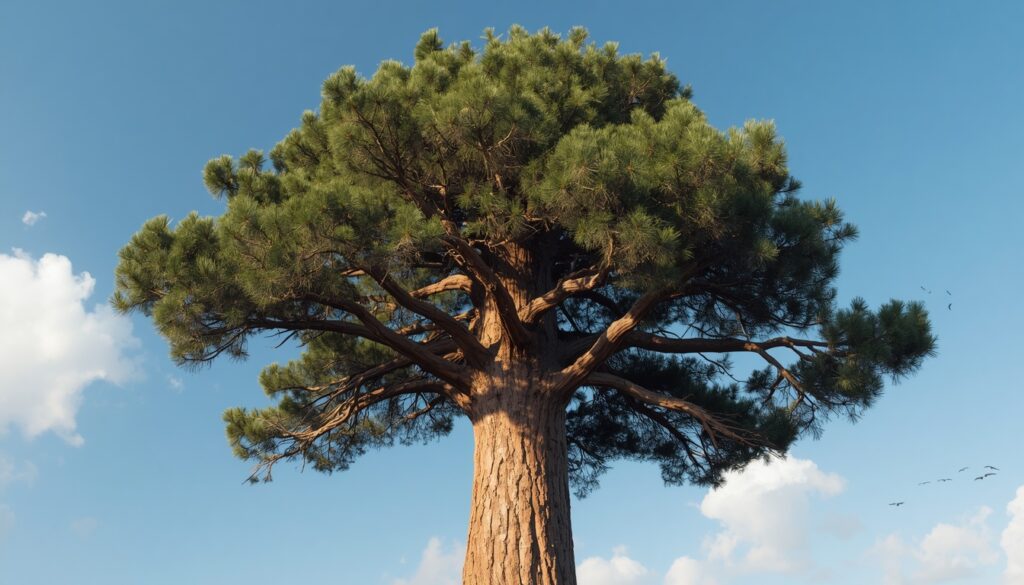
Certain species of Mature pine tree commonly grow to approximately 100 feet.
These towering trees dominate forest skylines and provide another excellent tree height comparison.
Not every pine reaches that height, obviously, but mature specimens certainly can.
It’s amazing how something planted from a tiny seed eventually becomes a natural measuring tape.
11. A Semi-Truck With Trailer and Extra Clearance
A standard Semi truck and Trailer together typically measure around 70 to 75 feet.
Add the recommended safety gap or another short vehicle behind it, and you’ve reached roughly 100 feet.
This comparison appears often in highways, trucking regulations, and construction planning.
Drivers naturally become good judges of distance over time.
12. An Extended Fire Truck Ladder
Some specialized Fire truck models feature Aerial ladder systems extending close to or beyond 100 feet.
These ladders allow firefighters to reach upper stories of buildings during rescues and emergencies.
They’re incredible examples of engineering, honestly. Watching one extend in real life feels almost unreal.
These measurements also play a vital role in Fire codes, Emergency rescue, and Safety clearance planning.
13. A Luxury Yacht
Many impressive Luxury yacht models measure around 100 feet in length.
At this size, a yacht begins feeling more like a floating mansion than a recreational boat.
Marinas around the world reserve dedicated slips specifically for vessels approaching this length.
It’s an elegant reminder that measurements aren’t only for construction sites.
14. Around 18 Adults Lying Head-to-Toe
The average adult measures about 5.5 feet tall.
Arrange approximately 18 adults lying head-to-toe, and you’ll create nearly 100 feet.
It’s an amusing comparison that’s surprisingly effective for classrooms and educational demonstrations.
Nobody usually volunteers first though… and fair enough.
15. Measuring It Yourself With a Tape or Laser Device
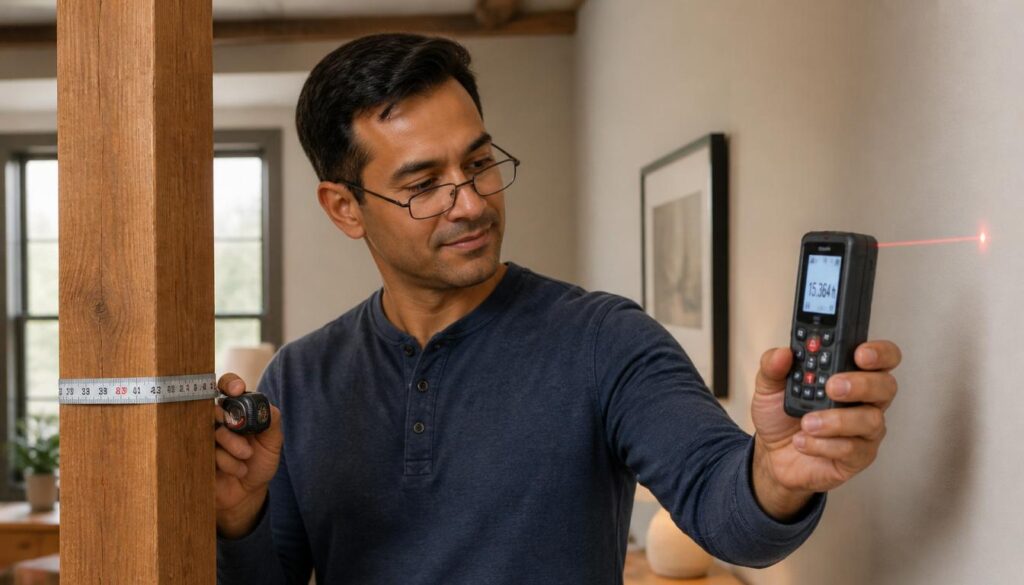
Sometimes the simplest example is the most practical.
Professional builders, surveyors, and property owners frequently measure 100-foot distance examples using a 100-foot tape measure or a Laser distance finder.
These tools support:
- Surveying
- Property dimensions
- Lot dimensions
- Urban planning
- Building elevation
- Site planning
- Utility line setback
- Engineering standards
Modern laser tools make measuring large distances incredibly quick, often within seconds.
Not long ago, doing the same task required two people and quite a bit more patience.
Why Understanding 100 Feet Matters
Knowing how to estimate 100 feet has more practical value than people first assume.
Homeowners use it when evaluating gardens, fences, and Residential lot sizes. Contractors rely on it during Construction measurements and Architecture measurements. Real estate professionals consider it while assessing Commercial property, Development potential, and overall Property evaluation.
Even emergency planners think about Safety distance, Emergency access, and equipment reach using familiar measurements like this.
It’s one of those everyday skills you don’t realize you’re using until suddenly… you are.
Simple Tricks to Visualize 100 Feet
If you struggle with estimating distances, try remembering one of these quick mental shortcuts:
- Two School buses parked end-to-end.
- Seven average cars lined up.
- From the football goal line to the 33-yard line.
- Slightly longer than a basketball court.
- Around the height of a ten-story building.
- A mature oak tree reaching toward the sky.
- About 35–40 walking steps.
- Roughly 18 adults lying head-to-toe.
Once one comparison sticks, the rest become much easier.
Everyday Situations Where 100 Feet Appears
You might encounter 100 feet more often than you realize:
- Designing a backyard or property boundary.
- Planning Parking lots.
- Evaluating campground spacing.
- Measuring dock space in Marinas.
- Estimating Building footprint dimensions.
- Setting up athletic facilities.
- Planning landscaping.
- Working with surveyors and engineers.
- Judging safe clearances around equipment.
- Visualizing outdoor event layouts.
Life has a sneaky habit of hiding measurements in plain sight.
Frequently aSked questions
how long is 100 feet
100 feet is equal to 30.48 meters or 33.33 yards. It’s about the length of one-third of a football field or roughly seven average cars parked end to end.
how tall is 100 feet
A height of 100 feet is approximately the same as a 10-story building. It is also comparable to the height of many mature oak or pine trees.
how much is 100 ft
100 ft is a standard measurement of length equal to 1,200 inches or 30.48 meters. It is commonly used in construction, sports, and property measurements.
how big is 100 ft
100 ft is a substantial distance that can be visualized as about seven car lengths, 18 adults lying head-to-toe, or one-third of a football field. It helps estimate large spaces and structures in everyday life.
rEad this Blog: https://prayersbloom.com/time-is-20-minutes-from-now/
Conclusion
Understanding 100 feet, or 100 ft, becomes much easier once you connect the number with familiar sights instead of abstract units. Whether it’s two school buses, seven cars, a towering oak tree, a luxury yacht, or the first third of a football field, each comparison transforms an invisible measurement into something tangible.
The next time someone asks how long is 100 feet, you probably won’t need a calculator. You’ll simply picture one of these everyday examples, and the answer will feel surprisingly obvious.
Which comparison helped you picture the distance most clearly? Maybe you’ve spotted another interesting object that is 100 feet long in everyday life. Share your favorite example it might become someone else’s easiest way to visualize 100 feet.

I’m SEO EXPERT, founder of Prayers Bloom and an AI-powered SEO & Content Writer with 6 years’ experience. I help websites rank higher, grow traffic, and stand out. I simplify SEO and web design to drive real results. Let’s grow your online presence together!